Product subscriptions in retail: what works, what fails, and why replenishment is different
09.06.2026

Subscription replenishment in retail - who subscribes and why, what the major implementations look like in practice, and where programs typically fail
Most retailers who have tried subscriptions will tell you two things: the economics look compelling on paper, and the execution is harder than it looks. Both are true.
This post covers what the data actually shows about subscription replenishment in retail, who subscribes and why, what the major implementations look like in practice, and where programs typically fail. The goal isn't to sell you on subscriptions. It's to give you a clear picture of what makes the model work and what makes it collapse, so you can make the right call for your product and your customers.
A model older than eCommerce
The subscription model is not a digital invention. Publishers of books and periodicals were running subscription programs in the 17th century. The 20th century gave us record clubs, magazine subscriptions, and cable. The digital era produced Netflix, Spotify, and Adobe Creative Cloud.
What's happening now is the migration of the same logic into physical consumables — and the numbers are striking. The global subscription eCommerce market was valued at $326 billion in 2024 and is projected to reach $3.4 trillion by 2029, a compound annual growth rate of 59%. Subscriptions on physical goods are no longer catching up to digital — they are on track to surpass them.
The driver isn't novelty. It's the recognition that a large share of retail purchases are predictable, habitual, and low-decision — and that consumers increasingly prefer to automate them.
Why consumers actually subscribe
Understanding the real motivations matters, because programs designed around the wrong assumption about why people subscribe don't retain them.
Research consistently surfaces four distinct drivers:
Automation and convenience. The most common reason. Shoppers want to stop thinking about products they need regularly — vitamins, pet food, cleaning supplies, toiletries, coffee. Subscribing removes the task from their mental list entirely. According to a survey of 16,000 active subscribers across five countries, convenience ranked as the primary reason for subscribing — above price savings, product discovery, or perks.
Cost savings. Most major subscription programs offer a straightforward discount — Amazon Subscribe & Save runs at 5–15% off, iHerb at 5–10% depending on volume, Kiehl's at 10% off with free shipping. For frequently purchased products, the savings compound meaningfully over time and create a concrete incentive to commit.
Curated discovery. A distinct motivation — and a different model. Some consumers subscribe to receive something they couldn't easily choose themselves: a curated wine selection, a seasonal clothing box, a themed snack assortment. This model is primarily about reducing decision fatigue in high-choice categories, not routine replenishment. The distinction matters for retention, as we'll cover later.
Access to perks. Premium membership subscriptions — Amazon Prime, Walmart+ — bundle benefits (free shipping, early access, faster delivery) that justify an annual fee regardless of any specific product. These operate differently from product subscriptions and create stickiness at the relationship level rather than the product level.
The split between these motivations has significant implications for program design. A replenishment subscriber wants reliability and frictionless automation. A discovery subscriber wants consistent surprise and curation quality. Programs that conflate the two tend to underperform on both.
Who's subscribing, and why
Subscription replenishment isn't uniformly distributed across demographics — and the skew matters for understanding where the growth is.
According to PYMNTS Intelligence research across US consumers, 39.3% of millennials purchase most or all of their regularly used items via scheduled or auto-fill product subscriptions — the highest of any generation. Generation Z comes in at 31.1%, bridge millennials at 38.3%, and baby boomers at 16.8%. Millennials also hold the most subscriptions per person: nearly half have four or more active product subscriptions, compared to just 18% of baby boomers. The cohort most comfortable with automated, always-on digital services is the same cohort most willing to extend that logic to physical goods.
The repeat purchase intent data reinforces this. 84% of millennials say they are very likely or likely to reorder items from a previous online order — and 75% of Gen Z say the same. That intention already exists. Most customers buying consumables online plan to buy them again. What subscription replenishment does is capture that intention automatically rather than leaving it to chance each cycle.
Repurchase intent is also high across the broader shopper base. A survey of 1,337 US consumers found that when asked what drives online grocery purchasing decisions, convenience ranked first by a wide margin — named by nearly 70% of respondents — ahead of price, product availability, habit, and loyalty rewards. For replenishment categories, the consumer psychology already favors automation: the question is which retailer makes it easiest.
Subscription behaviour also tends to expand over time. According to Recharge's 2023 State of Subscription Commerce report, which analysed data from over 15,000 merchants, consumers who subscribe to one product category are meaningfully more likely to seek out subscription options in other categories as well. This creates a structural advantage for retailers with broad assortments: each subscription a customer sets up increases the likelihood they'll set up another one. That cross-category pull is one reason Sephora's Auto-Replenish data shows 40% of subscribers signing up for products from more than one category — and why retailers covering multiple product groups (grocery, health, beauty, household) are particularly well-positioned to benefit from it.
What retailers gain (beyond the obvious)
The retailer case for subscriptions is usually made in terms of recurring revenue and retention. Both are real. But the more interesting gains are structural.
Retention rates that standard eCommerce cannot match. Average eCommerce retention rates sit at around 28–32% after 12 months. Subscription-based eCommerce consistently achieves 45–67% retention over the same period. For consumable categories — pet food, supplements, skincare — subscription models can reach 84% retention. The difference is structural: a subscribed customer has made one decision that replaces a recurring one.
LTV economics that change what you can spend on acquisition. Subscription customers generate 3–5x more revenue over their lifetime than one-time buyers in the same category. In replenishment categories specifically — vitamins, beauty refills, pet food — DTC subscription LTV:CAC ratios have reached 4:1, against an eCommerce average of 2.8:1. That gap compounds: a business with a 4:1 LTV:CAC ratio can outspend a competitor at 2:1 while remaining equally profitable.
Demand predictability. At scale, subscription order data tells you what's coming before it's ordered. Sephora has specifically cited subscription data as a tool for maintaining availability on high-velocity SKUs — knowing that a large share of demand for specific products is committed weeks in advance changes how you plan inventory and logistics.
Behavioral data one-time purchases don't generate. How a subscriber configures their subscription — how often, which substitution preference, what they pause and when — reveals brand loyalty, price sensitivity, and usage patterns that no survey captures as accurately. Sephora found that 40% of Auto-Replenish users subscribe to products from more than one category, generating meaningful cross-sell revenue that flows directly from the subscription data.
Structural switching costs — without lock-in. A subscriber who has set up their delivery schedule, saved their address and payment details, and configured their preferences has meaningful friction to overcome before switching to a competitor. This isn't a punitive lock-in — it's a structural advantage created by the customer's own investment in setup. 65% of subscribers say flexibility to pause or cancel anytime is the primary reason they subscribe — meaning customers will voluntarily create their own switching friction if the program earns their trust.
How the major programs are built and what they offer
These four implementations represent the current standard for replenishment subscription programs in retail. Each is worth understanding on its own terms.
Amazon Subscribe & Save
Launched in 2007, the program that set consumer expectations for how replenishment subscriptions should work. Subscribers receive a 5% discount on any subscribed product, scaling to 15% when five or more items are bundled for the same delivery date. Frequency is set per product. Pre-shipment notifications allow adjustments, skips, or cancellations before each order. Up to ten products from different categories can share one delivery cycle.
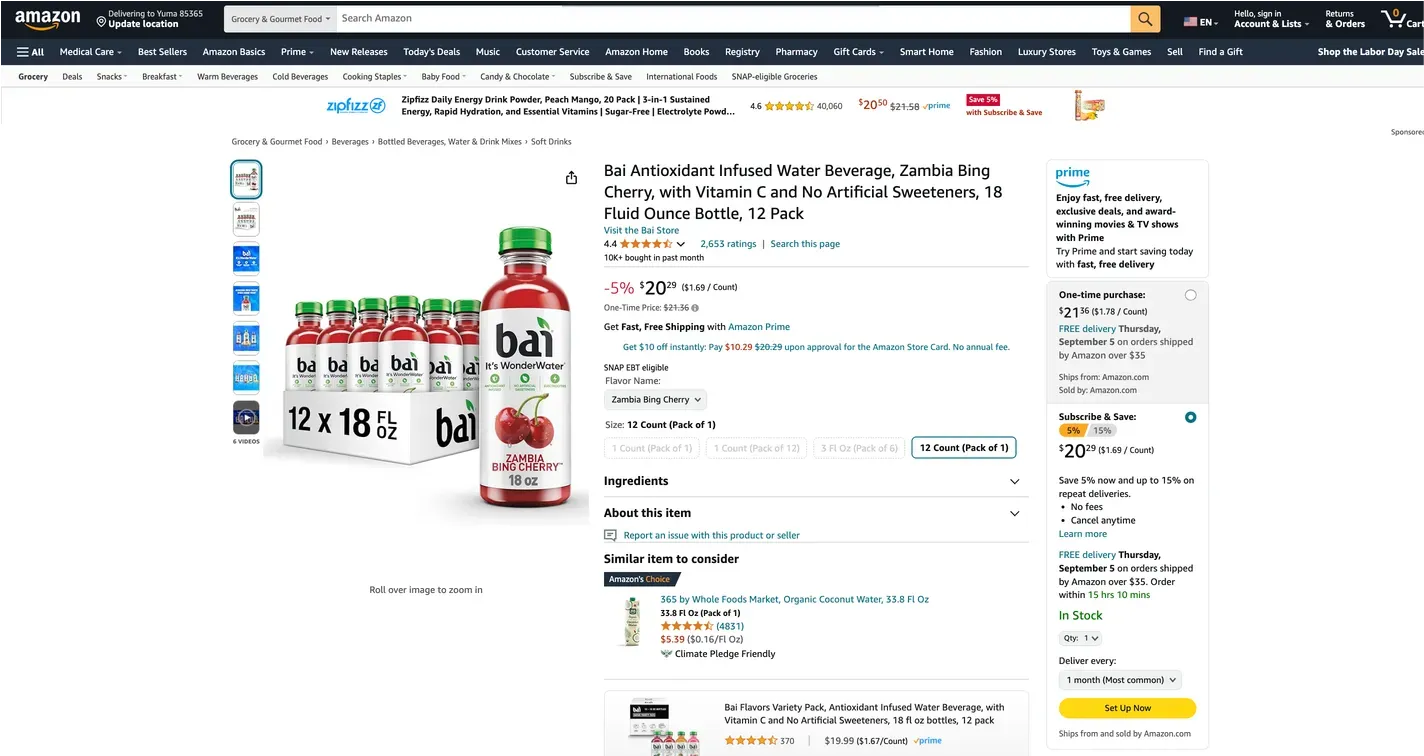
The depth of the program matters: years of subscription history, product-level recommendation of delivery frequency, and integration with Prime benefits create a retention flywheel that standalone programs struggle to replicate. But the mechanics, discount, flexibility, notification window, account management remain the reference implementation.
Sephora Auto-Replenish
Launched in 2022. 5% off and free shipping on all subscription orders. Product pages display a retailer-recommended delivery frequency based on typical product usage cycles. The checkout supports both subscription and one-time items in a single basket — a usability detail that removes the friction of managing separate orders. Pause, skip, and cancel are available at any time from the account.
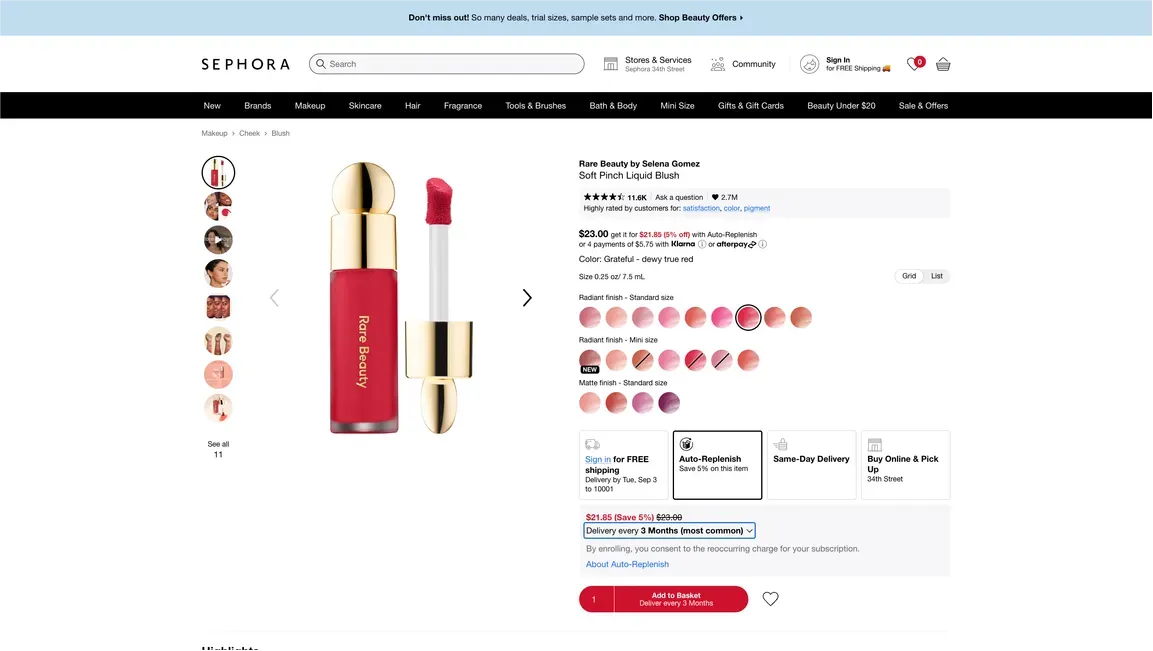
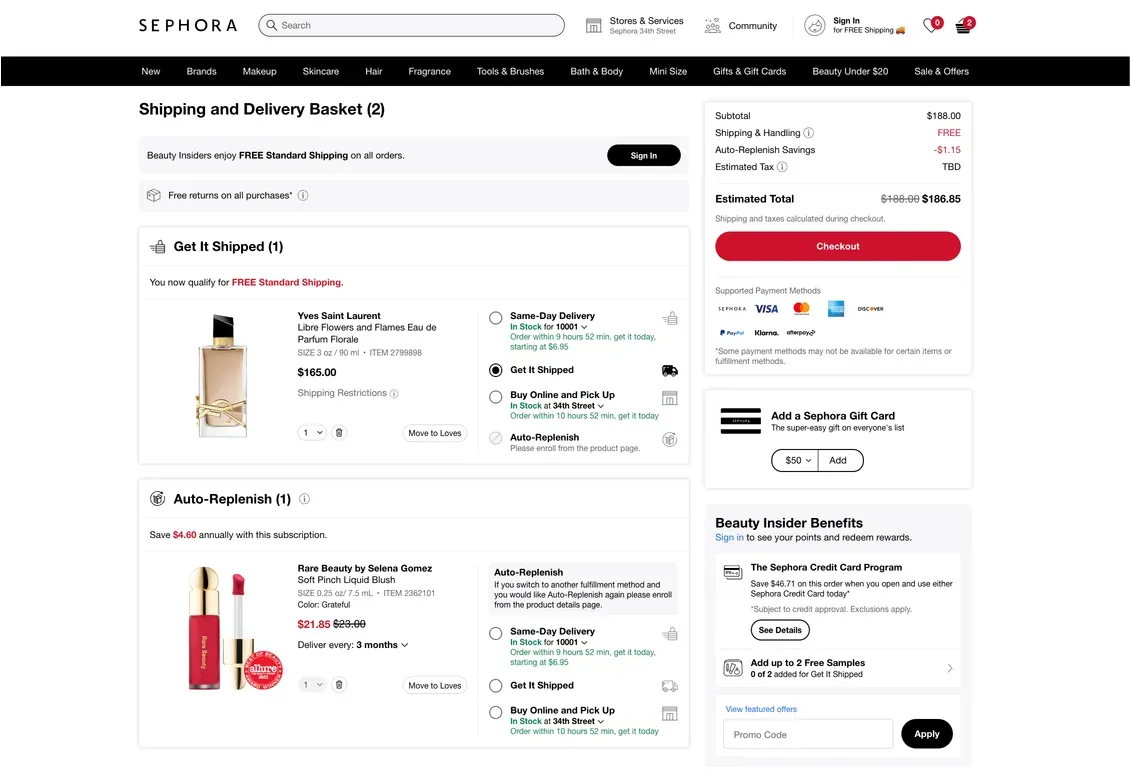
The program generates cross-category behaviour that one-time purchasing doesn't: 40% of subscribers sign up for products from more than one category. The convenience of the subscription format appears to lower the barrier to trying adjacent products, which means the subscription channel drives discovery as well as retention.
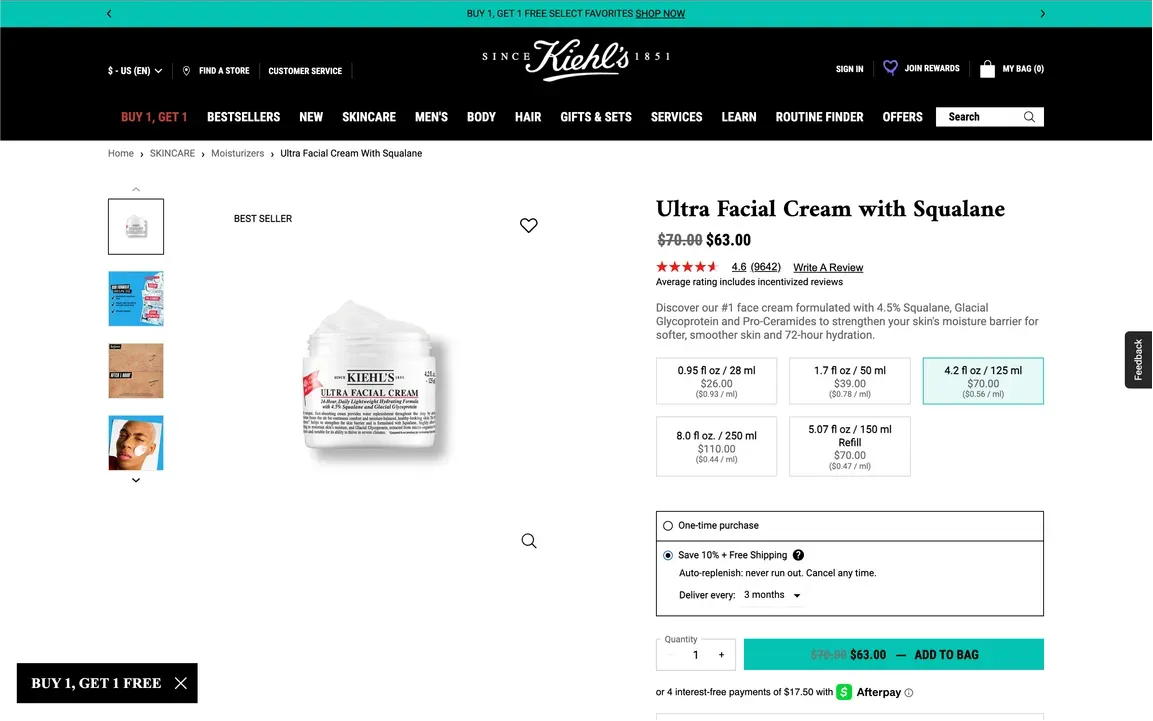
Kiehl's Auto-Replenishment
10% off plus free shipping on subscription orders. Cancel at any time. The model is simpler than Sephora's but effective in a skincare category where replenishment cycles are consistent and customers tend to be brand-loyal. The explicit no-commitment positioning, frequent prominent "cancel anytime" messaging, reduces perceived subscription risk and increases conversion.
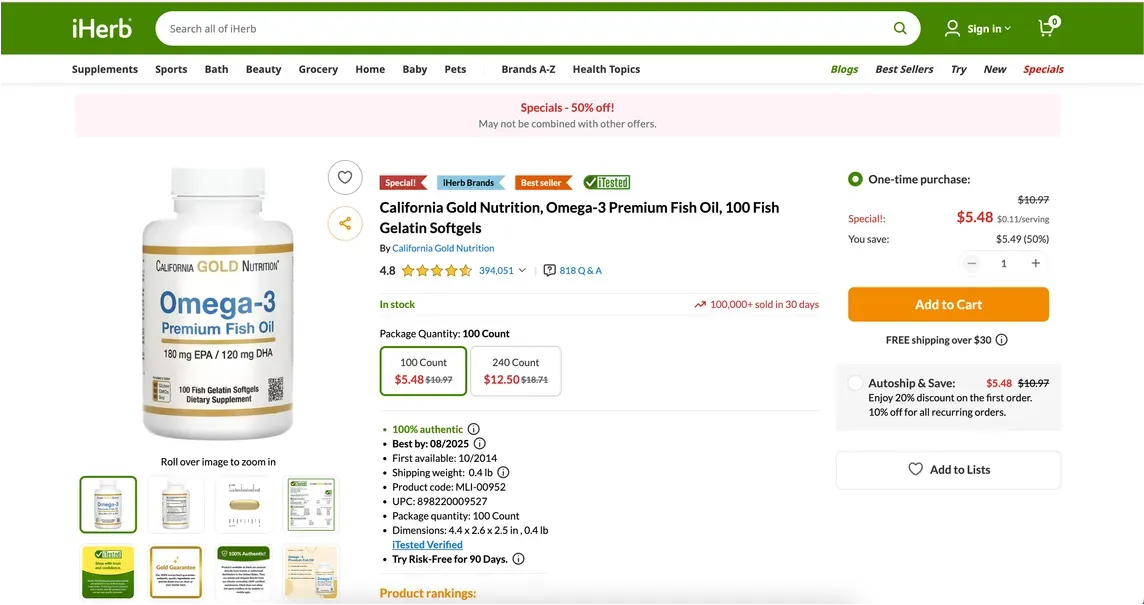
iHerb Autoship & Save
5% off the first subscription order, 10% or more on recurring orders when subscribing to five or more items for simultaneous delivery. The platform suggests delivery frequency per product based on typical usage intervals — useful for supplements where the right frequency isn't obvious to the customer. Customers select one delivery date per month and all subscribed items arrive together, simplifying logistics for both parties.
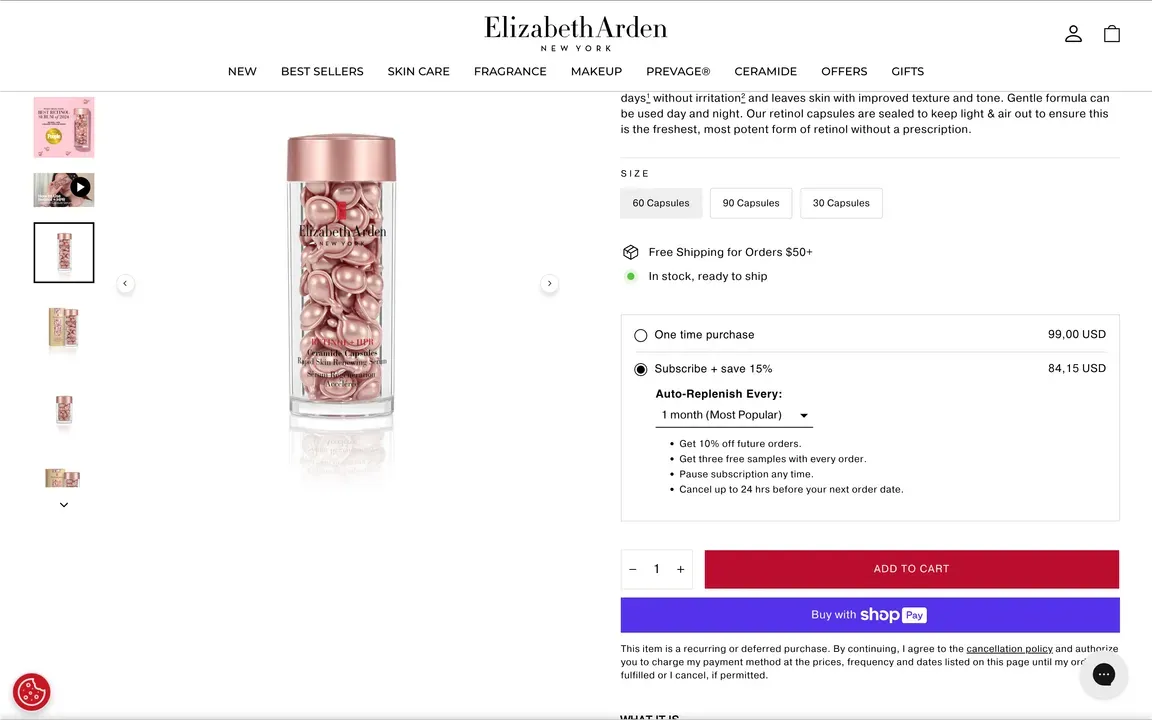
ELIZABETH ARDEN AUTO-REPLENISH
15% Off your first purchase
10% off all future deliveries
Free samples with each shipment
Monthly or bi-monthly options
Skip or cancel anytime
Free shipping on all orders
Products are excluded from promotions
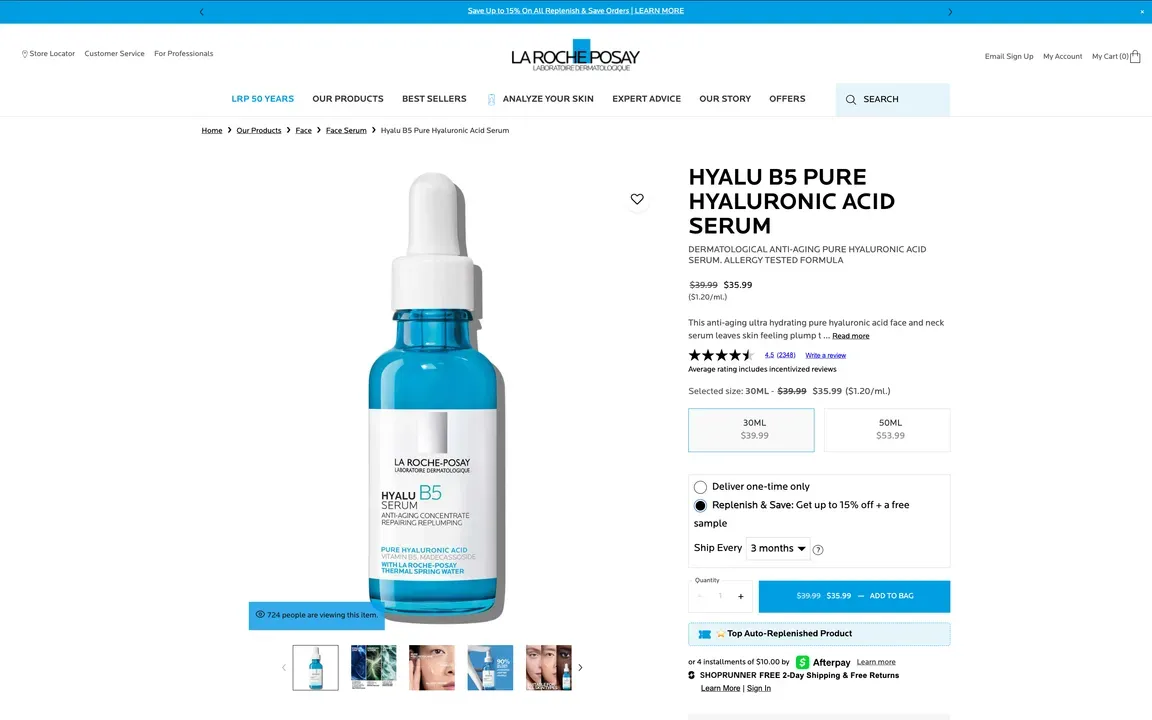
LA ROCHE POSAY AUTO-REPLENISH
1st & 2nd orders: 10% off + a free sample
3rd order: 15% off + a free sample
Adjust replenishment frequency at any time
What all these programs share: a discount incentive, flexible frequency settings, easy account management (pause, skip, cancel), and a pre-delivery notification window for adjustments. These are not differentiators, they are the baseline. Programs that offer less will see higher churn against programs that meet this standard.
Replenishment in our practice: the Varus implementation
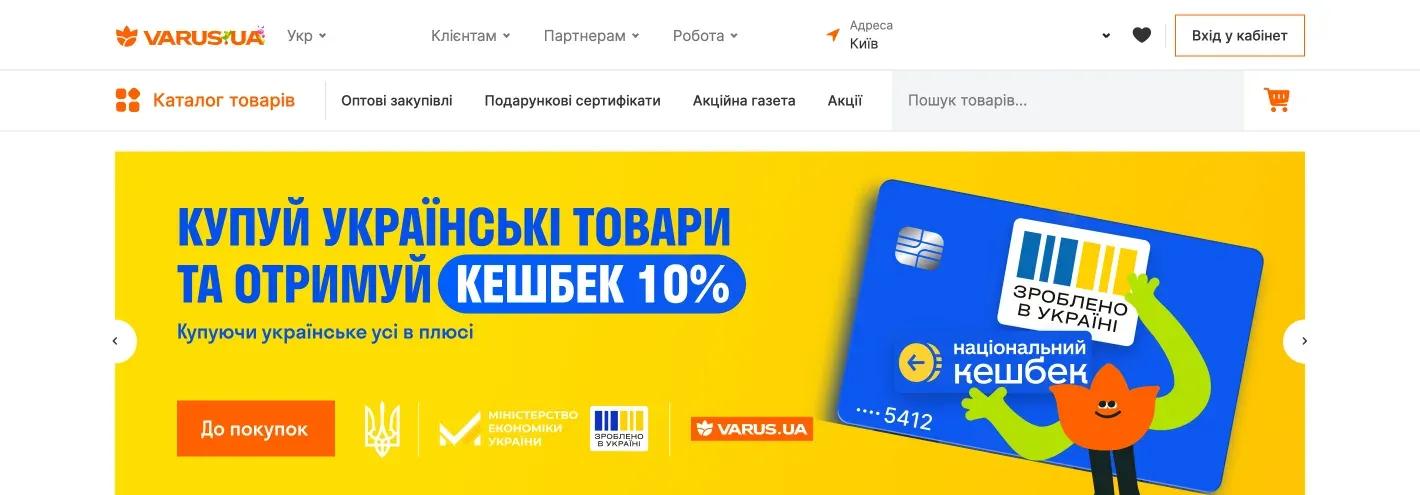
Varus is a Ukrainian grocery chain with 110 physical supermarkets and over 323,000 customers per day. The replenishment subscription feature was built as part of a broader headless eCommerce rebuild (Magento 2 + Alokai / Vue Storefront) and is live at varus.ua.
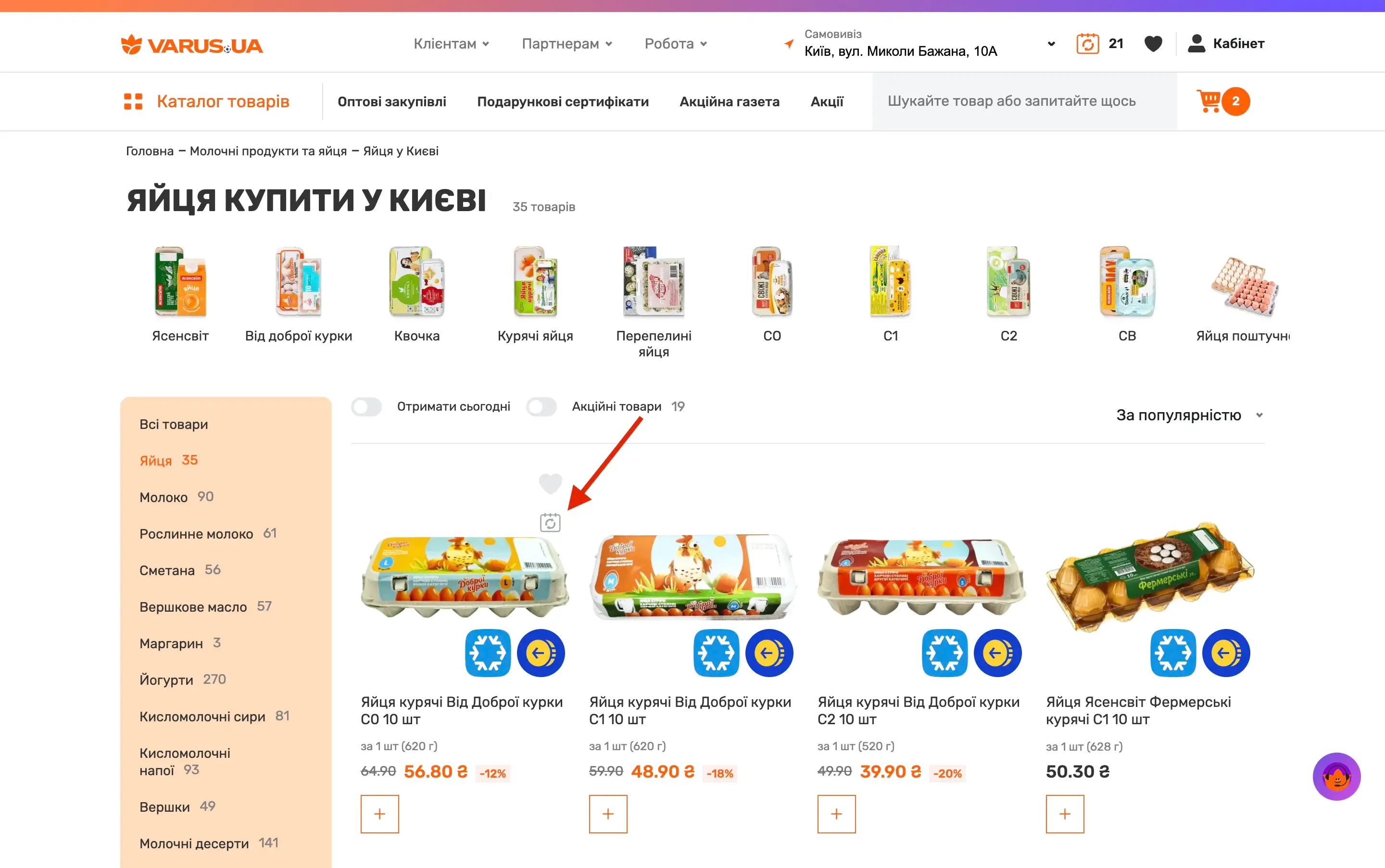
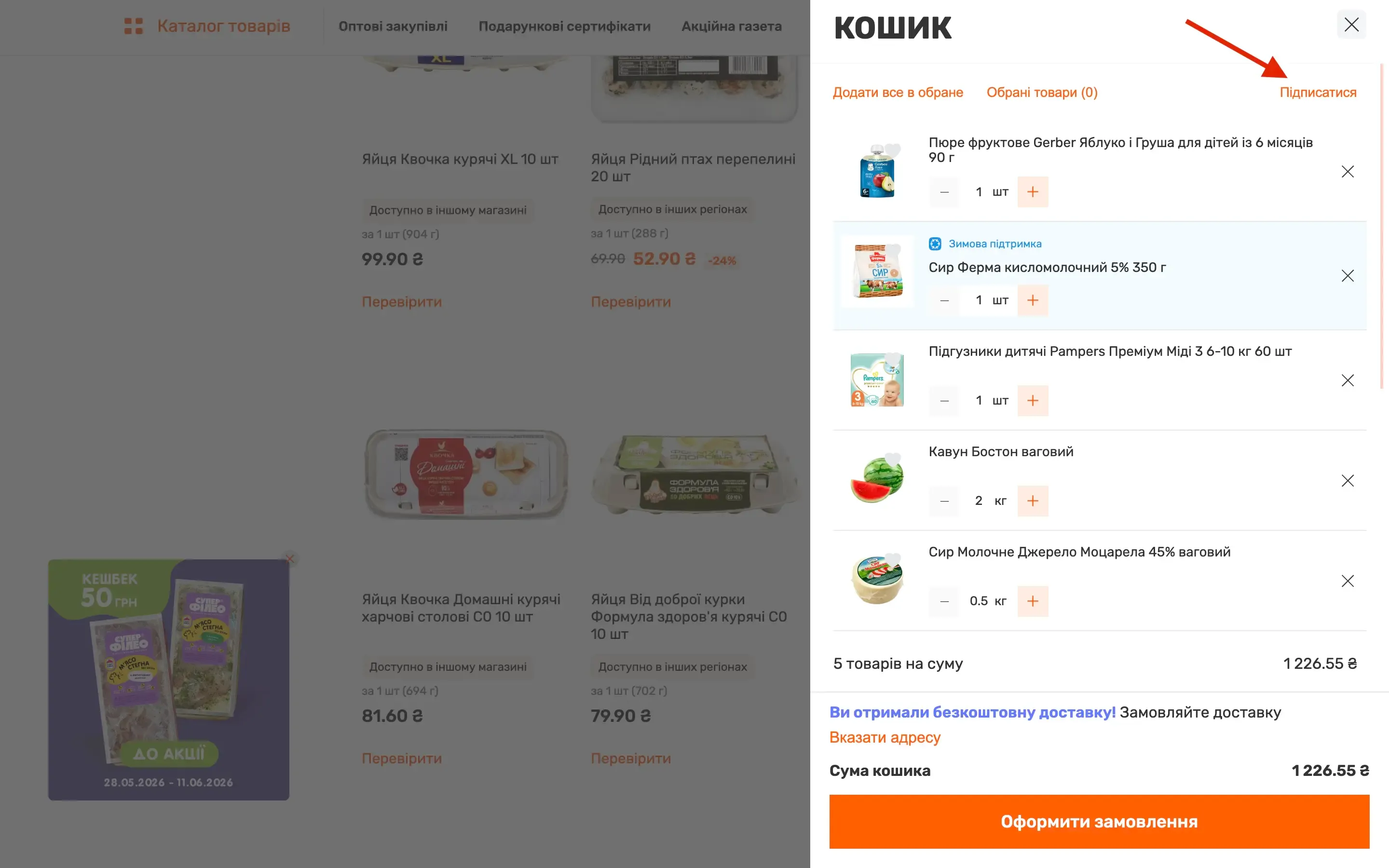
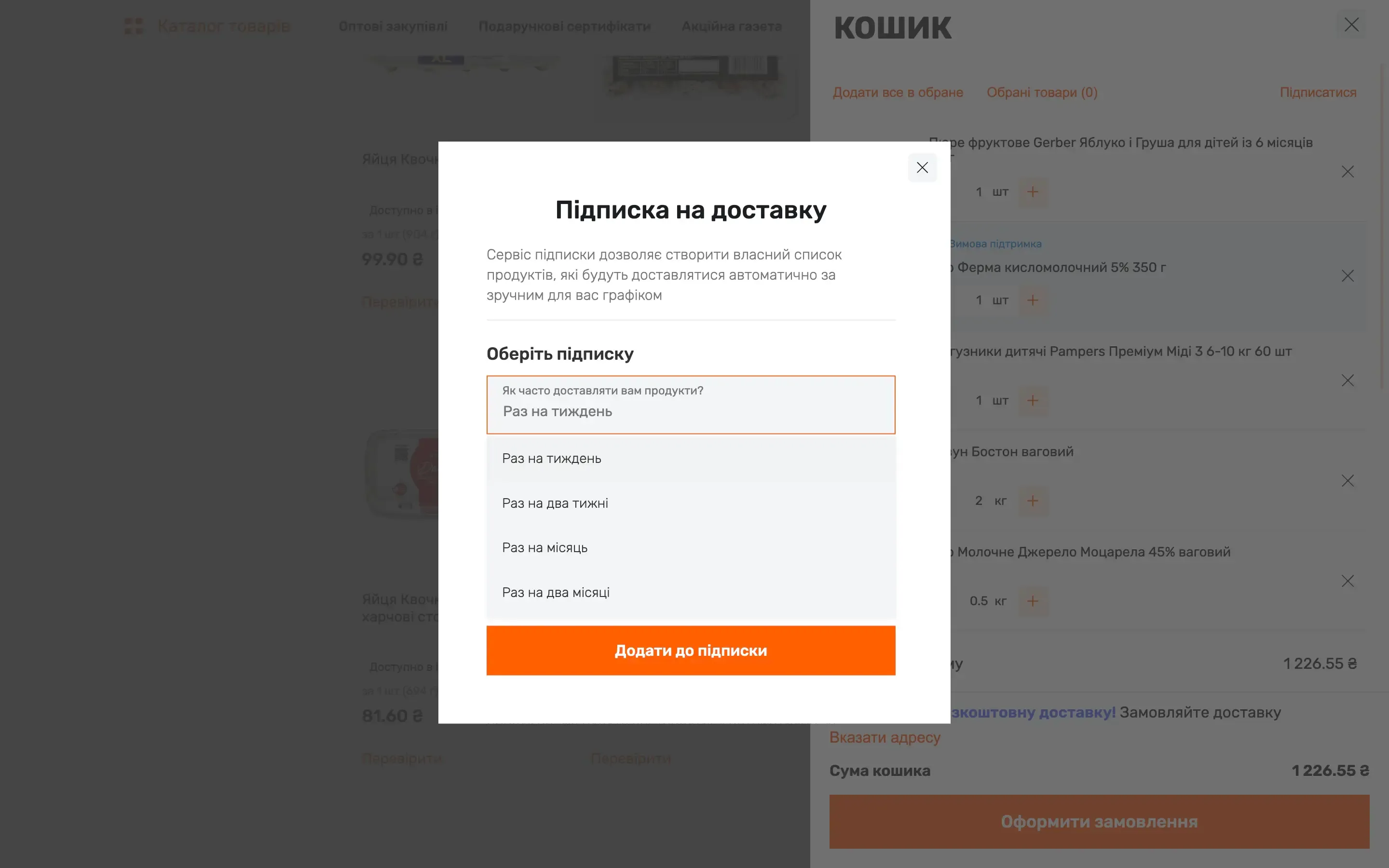
The implementation covers the full UX of subscription replenishment:
-
Subscribe to individual products or an entire cart in a single flow
-
Delivery frequency configured per item: weekly, biweekly, monthly, bimonthly
-
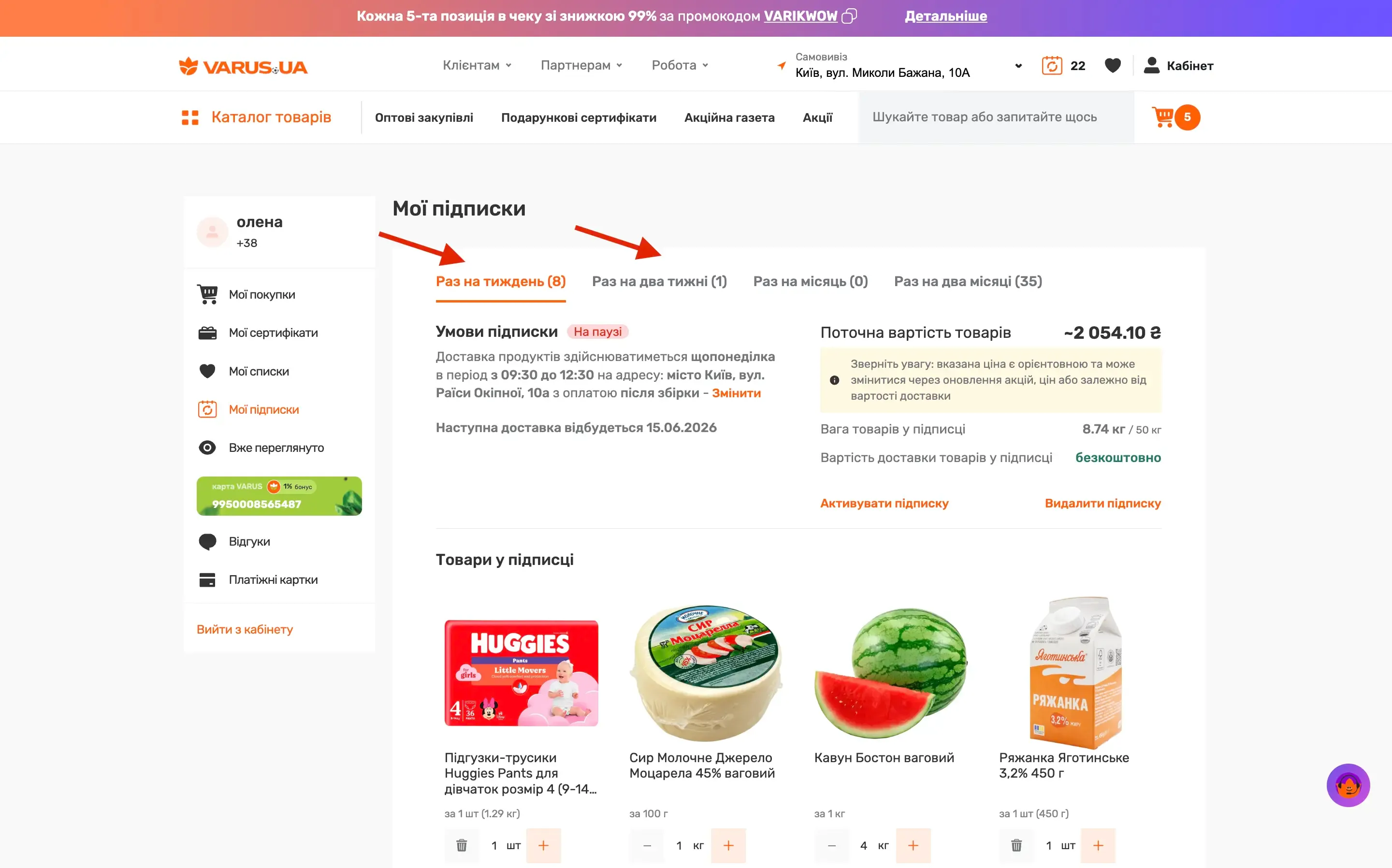
Multiple parallel subscriptions at different frequencies, diapers weekly, vitamins every two months (each managed independently from the user account)
-
Delivery address, time slot, and payment method configured at subscription setup
-
Substitution logic selected at setup: picker's discretion / no substitution / auto-select comparable item by price / select discounted comparable at generation time / "surprise me"
-
Full account management: edit, pause, activate, delete, view estimated upcoming basket cost
-
Free delivery on subscription orders The substitution logic is worth pausing on, because out-of-stock handling is consistently where subscription programs generate friction. If a subscribed product is unavailable and the program either cancels silently or calls the customer each time, trust in the subscription degrades fast. Letting subscribers pre-configure their substitution preference at setup — before they ever encounter an out-of-stock — removes the problem from the fulfillment cycle and turns it into a preference signal instead.
The full case study is at eltrino.com/portfolio/varus.
Why replenishment can programs fail
The case for subscriptions is real, but so is the failure rate. Understanding the failure modes matters at least as much as understanding what works.
Failure mode 1: selling novelty when the customer needed reliability
The subscription box wave of the early 2010s — Birchbox, Trunk Club, Blue Apron, Stitch Fix — was built on discovery, not replenishment. Novelty and curation were the product. Customers opened the box to see something they hadn't chosen. That model has proven structurally fragile at scale.
Birchbox — widely credited with popularising the beauty subscription box — laid off 25% of its global workforce in 2020, sold a majority stake at a distressed valuation, changed hands again in 2021, and eventually went dark: website disabled, vendors unpaid. Nordstrom wrote off $200 million on Trunk Club before shutting it down entirely. Stitch Fix contracted for 12 consecutive quarters before partial recovery through a shift away from pure box subscription toward more flexible purchasing.
The specific failure mechanism is the same in each case: the novelty of receiving curated items wears off. Recommendations drift from preferences. Competitors launch alternatives. Around 50% of consumers cancel their subscriptions within the first six months, with delivery issues and product quality most often cited, a pattern that concentrates in discovery models where the curation promise is difficult to consistently deliver.
Replenishment subscriptions don't have this problem. The value is not surprise — it's that laundry detergent or pet food arrives without the customer having to think about it. The product doesn't need to be interesting. It needs to arrive.
Failure mode 2: treating churn as a marketing problem when it's an engineering one
A significant share of subscription cancellations are not decisions — they are accidents. Involuntary churn — subscriptions lost to failed payments rather than deliberate cancellation — accounts for 20–40% of total subscription churn, and up to 68% in subscription boxes specifically. Expired credit cards, insufficient funds around billing dates, issuer hard declines: these are fixable technical problems that get treated as acquisition and win-back problems instead.
For consumer goods and retail subscriptions, voluntary churn runs at 3.3% per month and involuntary churn at 0.8% — meaning roughly one in five churned subscribers never chose to leave. Winning them back with a discount email is an expensive way to solve a problem that smart payment retry logic, pre-expiry card update prompts, and structured dunning sequences would prevent in the first place.
Failure mode 3: launching before the market is ready
Subscription replenishment requires a specific set of preconditions to work: customers already comfortable buying online, reliable delivery infrastructure, and payment methods that support automatic recurring charges. Where those conditions are weak, even a well-designed program will underperform.
This is the less-discussed failure mode — not a product decision or a UX failure, but a market-readiness problem. iHerb's trajectory is instructive. When it launched Autoship & Save in 2021, it started in the US with plans to expand internationally. The US market had the highest concentration of its target customer: supplement-habituated shoppers comfortable with automated recurring orders and card-on-file payments. The program has since expanded to 30+ countries including Germany, France, Spain, and Poland — but the sequencing was deliberate.
The underlying barriers vary by market. The European market is more fragmented than the US, with significant cultural differences in consumer attitudes toward subscriptions and the willingness to commit to recurring payments. Payment infrastructure also differs — some countries still rely heavily on cash or bank-transfer-based payment methods that don't suit automatic recurring billing. The EU's PSD2 regulation adds a further layer: Strong Customer Authentication requirements mean recurring payments require additional verification steps that don't exist in the US, adding friction to subscription setup and renewal that can suppress conversion and increase involuntary churn.
Beyond Europe, the deeper issue is eCommerce penetration itself. Subscription replenishment is a second-order behaviour: it only makes sense for customers who are already comfortable buying a product category online in the first place. According to a 2019 YouGov survey, between 80% and 85% of US internet users said they had never signed up for any retail subscription service — and of those who had tried grocery subscription boxes, lapsed subscribers outnumbered active ones. Consumer readiness varies significantly not just by country but by category and demographic within a single market.
The practical implication: before building out subscription replenishment, it's worth checking whether your core customers already buy that product category online regularly and whether your payment stack actually supports clean recurring billing in your target markets. Launching subscriptions into a market where customers still predominantly purchase in-store, or where payment infrastructure creates recurring friction, solves a problem the customer doesn't have.
Failure mode 4: rigidity that makes cancellation the only reasonable option
In 2024, subscription pauses grew by 66% year-over-year. The reason is straightforward: customers face temporary situations — a move, a fully stocked cabinet, a tight budget month — that don't represent a decision to stop subscribing permanently. Programs that offer only "active" or "cancelled" give customers no middle ground. When the only option is cancellation, most customers take it — and cancellation is almost always permanent.
Businesses that offer a pause option instead of an outright cancellation retain over a quarter of would-be churners. The data from Recurly shows those paused subscriptions generated over $200 million in re-subscription revenue across its customer base. The investment in building a pause feature pays back directly and measurably.
65% of subscribers say flexibility — the ability to pause or cancel at any time — is the number one reason they subscribe in the first place. Programs that earn this trust through genuine flexibility are the ones customers choose not to leave.
Which categories work for replenishment and which don't
The strongest subscription replenishment programs share one structural characteristic: they sell products that run out on a predictable schedule. The customer can estimate when they'll need more because usage is habitual and relatively consistent.
The categories with the highest subscription retention — beauty and personal care, food and beverage, health and wellness, home goods, pets and animals — all share this property. Replenishment subscriptions churn least because the value is habitual: a consumable product shows up on a predictable schedule and the customer uses it without thinking.
Categories that underperform: fashion (trend-driven, individual sizing makes consistent curation difficult at scale), electronics (long replacement cycles — a laptop isn't a replenishment problem), and discovery-heavy categories like colour cosmetics where the appeal is variety and novelty rather than reliability.
The practical test is simple: if a customer can reasonably predict when they will run out of something, it is a candidate for replenishment subscription. If the purchase decision is driven by what is fashionable, exciting, or currently on sale, it is harder to make the subscription model stick.
Where subscriptions are heading: AI agents in the subscriber relationship
The core mechanics of replenishment subscriptions — configure once, deliver on schedule, manage from your account — are already mature. The next shift is in how the ongoing subscriber relationship is managed.
Recharge, which powers subscriptions across over 20,000 brands and 100 million+ active subscriptions, announced in May 2026 that it is building AI agents that handle the subscriber relationship through SMS in real time: answering product questions, managing upcoming orders, processing subscription changes, surfacing upsells at high-intent moments, and collecting structured feedback — all within a conversation, without the subscriber visiting an account portal. Early data from Recharge shows 90% of subscribers prefer SMS-based management over traditional portals, and those interactions are generating 1.3x higher lifetime value than portal-only interactions.
For merchants, a parallel AI layer sits inside the platform itself: a conversational interface that analyses subscriber behaviour, explains changes in churn or AOV, identifies retention opportunities, and can launch or adjust lifecycle flows directly from within the insight.
What this signals for retailers considering subscription replenishment: the infrastructure around the model is evolving faster than the model itself. Setting up flexible, well-structured subscription data now — frequency preferences, substitution behaviour, pause patterns, category overlap — is what gives AI-driven personalisation something meaningful to work with. The retailers who will benefit most from the next generation of subscription tooling are the ones whose programs already generate clean, structured subscriber data.
FAQ
A replenishment subscription automates the reordering of a specific product a customer already buys regularly — the same item delivered on their chosen schedule. A subscription box delivers a curated selection of products, often varying each cycle. Replenishment subscriptions retain customers primarily through convenience and reliability; subscription boxes retain them through the quality of curation. These are structurally different models with different success drivers and different failure modes.
Replenishment categories with habitual, predictable usage cycles perform best: beauty and personal care, food and beverage, health and wellness (particularly supplements), household consumables, and pet supplies. These categories have predictable usage rates, making the subscription timing easy to configure accurately. Fashion and electronics underperform because purchase decisions in those categories are driven by trend, occasion, or long replacement cycles rather than routine replenishment.
Out-of-stock handling is one of the most common failure points in subscription programs. The best implementations — including the Varus replenishment system — let customers pre-configure their substitution preference at subscription setup: maintain only this exact product, select a comparable item at the same price, choose the discounted comparable available at generation time, or skip the item. Pre-configuring this preference removes the friction from every subsequent delivery cycle.
Subscription churn has two distinct causes. Voluntary churn — customers actively deciding to cancel — accounts for roughly 60–80% of total churn. Involuntary churn — subscriptions lost to failed payments, expired cards, and billing errors — accounts for 20–40%. Most businesses focus retention efforts on voluntary churn while leaving the involuntary churn largely unfixed. Payment retry logic, pre-expiry card update prompts, and structured dunning sequences recover a meaningful portion of involuntary churn before it becomes permanent.
Flexible enough that pausing feels easier than canceling. At minimum: configurable delivery frequency, the ability to skip individual orders, a pause option, and self-service account management accessible without contacting support. Programs without a pause option force a binary choice between "active" and "canceled" — and customers facing temporary circumstances choose cancellation. Subscription pauses grew 66% year-over-year in 2024, and businesses that offer a pause option retain over 25% of would-be churners.
No. The model works best for products with predictable consumption cycles — items the customer knows they'll need more of. If usage is consistent and the customer can reasonably anticipate when they'll run out, the product is a strong subscription candidate. If the purchase decision is driven by trend, occasion, or seasonality rather than routine need, the subscription model is harder to sustain. Fashion and electronics consistently underperform replenishment categories on subscription retention.
No and this is an underappreciated failure mode. Subscription replenishment requires customers already comfortable buying the product category online, delivery infrastructure that supports reliable recurring orders, and payment methods that handle automatic recurring charges cleanly. In markets where eCommerce adoption in a given category is still low, or where payment regulation adds friction to recurring billing (as PSD2's Strong Customer Authentication requirements do in Europe), well-designed programs can still underperform simply because the market conditions aren't ready. The right question isn't just "does my product fit subscriptions?" but "do my customers in this specific market already buy this category online consistently?"
Conclusion
The subscription replenishment model works when it solves a real, recurring need — and fails when it's bolted onto products that don't have one. The retailers who have built durable programs haven't just added a billing mechanism; they've made a promise to the customer that the thing you need will be there when you need it, without you having to think about it. That promise is only as strong as the program's execution: the UX that makes setup frictionless, the substitution logic that handles out-of-stocks gracefully, the pause feature that keeps temporary circumstances from becoming permanent cancellations.
The demand to reorder is already there. Most of your customers intend to come back for the same products. The question is whether you give them an easy way to automate that intention or leave it to chance every cycle.
See how a full replenishment subscription was built for Varus → eltrino.com/portfolio/varus