
Magento and Adobe Commerce
Magento and Adobe Commerce give you the freedom to build eCommerce solutions around your unique business logic, whether you're running a global B2C storefront, a complex B2B operation, or a composable architecture with multiple systems in play.
Total freedom to implement your unique business logic without compromise
Freedom to build. Flexibility to scale. From open source to SaaS.
Magento Open Source and Adobe Commerce (formerly Magento Commerce) are built for flexibility. Whether you're launching a complex B2B portal, scaling a multi-brand ecosystem, or designing a highly customized product experience—this platform lets you go beyond templates and plugins.
Unlike SaaS-first platforms with fixed boundaries, Magento’s modular architecture and open APIs let you define and build exactly what your business requires. Adobe Commerce extends that with powerful built-in features, cloud hosting, and enterprise-level performance.
Today, Adobe is evolving the platform even further with new SaaS-native options that offer faster performance, AI-powered content capabilities, and a versionless, low-maintenance experience designed to support both modern storefronts and composable commerce strategies.
At Eltrino, we have developers who were working on Magento itself since its earliest versions. We design and deliver highly customized stores on Open Source, Adobe Commerce, and the latest SaaS-based Adobe Commerce variants—tailored to your workflows, integrations, and long-term growth plans.
Magento Open Source
Fully customizable. Developer-driven. Ideal for growing brands

Magento Open Source (Magento 2) is a powerful, self-hosted eCommerce platform that gives merchants complete control over every aspect of their storefront codebase, integrations, business logic, and customer experience. It’s the foundation of Adobe Commerce and remains a go-to solution for companies that value flexibility over pre-packaged functionality.
With no licensing fees, it’s ideal for mid-sized businesses, early-stage brands, or digitally mature companies that want to invest in building something tailored to their operations, especially when paired with** modern frontend solutions** like Hyvä or Vue Storefront
Why to choose Magento Open Source?
- Powers over 120,000 live stores globally
- Ideal for fully custom UX, headless architecture, or tailored checkout flows
- No vendor lock-in, host and scale on your own terms
- Thousands of extensions, themes, and integrations available
- Supported by a massive open-source community of over 300,000 developers
- Trusted by High-Traffic Retailers
Magento Open Source isn’t just for small brands, it’s the foundation for some of the world’s busiest online stores:
- HarborFreight.com – over 40 million visitors per month
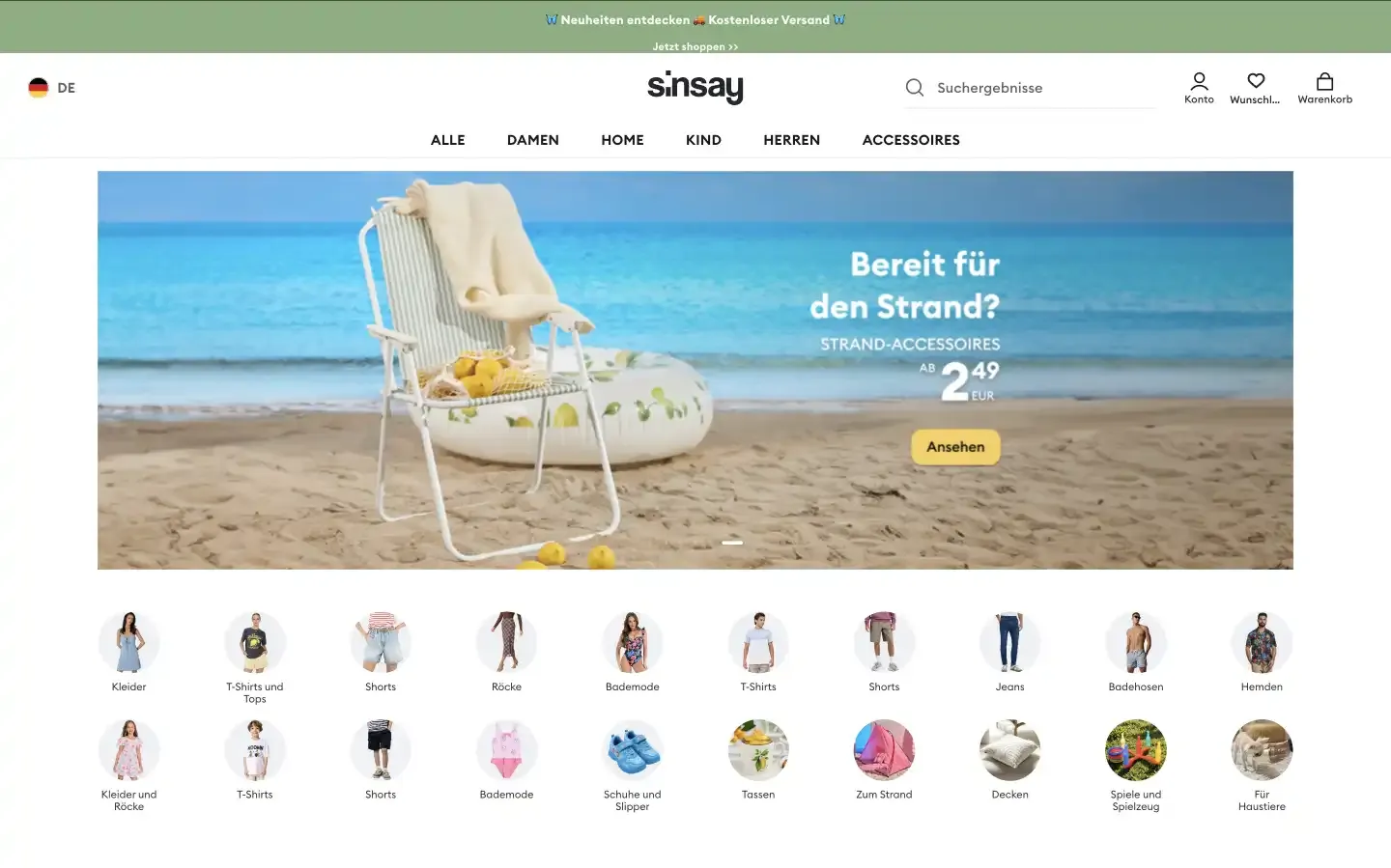
- Sinsay.com – over 25.9 million monthly visits
Adobe Commerce (On-Prem / Cloud)
Enterprise-ready platform with advanced B2B out-of-the-box, cloud or on-premise, and personalization tools.

Adobe Commerce is the commercial version of Magento, built for businesses that need more than just core eCommerce functionality. It extends Magento Open Source with a wide set of enterprise-grade features ranging from B2B capabilities and advanced promotions to visual merchandising, performance monitoring, and business intelligence.
It can be deployed either on your own infrastructure (on-prem) or on Adobe’s managed cloud environment (PaaS) giving you flexibility to meet internal policies, compliance requirements, or scalability needs.
Why choose Adobe Commerce?
- Rich out-of-the-box features: visual merchandising, content staging, gift cards, returns management, and more
- Native B2B suite: customer-specific catalogs, quote requests, approval workflows, company accounts
- Flexible deployment options: host it yourself or use Adobe’s managed cloud infrastructure
- Supports data sovereignty and on-prem hosting for industries with strict regulatory or infrastructure requirements
- Deep integration with Adobe tools like Analytics, Target, and Experience Cloud
Trusted by:
Enterprise and mid-market brands like Nike, Helly Hansen, Moschino, Nestlé, Cox & Cox, Canon, Olympus, Liverpool FC use Adobe Commerce to power complex commerce environments across multiple regions, channels, and customer types.

Adobe Commerce as a Cloud Service (SaaS)
Versionless SaaS built for performance, personalization, and continuous innovation.

Adobe Commerce as a Cloud Service is the latest evolution of the Magento platform—reimagined as a fully managed, versionless SaaS solution. It’s designed for enterprise-grade B2C and B2B eCommerce operations that demand speed, stability, and scalability.
Powered by Adobe’s cloud-native infrastructure, this platform delivers high-speed storefronts that significantly boost organic traffic and conversion rates. It removes the burden of upgrades, patching, and manual maintenance—so teams can focus on growth, not infrastructure.
Why Adobe Commerce SaaS?
- ⚡ Optimized performance: lightning-fast storefront delivery improves SEO, user experience, and conversion
- 🔁 Versionless architecture: new features and security updates are delivered continuously, with no upgrade downtime
- 🧠 AI-powered content & merchandising: built-in generative AI tools enhance product discovery and personalization
- 📦 Scalable catalog management: handle complex data structures and high-SKU volumes with ease
- 💰 Lower total cost of ownership: reduced DevOps, hosting, and operational complexity
- 🔄 Simplified migration path from Adobe Commerce (on-prem/cloud)
🧩 Adobe Commerce Optimizer
For businesses that want the speed and intelligence of Adobe’s frontend experience without replacing their current eCommerce engine Adobe Commerce Optimizer offers a modular alternative. It plugs into any backend system and delivers the same high-performance storefront, merchandising engine, and AI-driven features as the full SaaS platform.
Please Note! This section was written based on Adobe statements about SaaS version and Adobe Optimizer. Adobe Commerce as a Cloud Service and Adobe Commerce Optimizer will be generally available in June 2025.
Magento Open Source vs Adobe Commerce
Which edition fits your business best? Here’s what to consider.
Magento Open Source and Adobe Commerce share the same foundation but serve different business needs. Below are the most common questions we hear and how the two versions compare:
💡What does Adobe Commerce include that Open Source doesn’t?
Adobe Commerce adds a suite of enterprise-grade features out of the box, including:
- Visual merchandiser & content staging
- B2B functionality (company accounts, quotes, shared catalogs)
- Gift cards, store credits, RMA, customer segmentation
- Business Intelligence dashboards
- Adobe integrations (Target, Analytics, Experience Cloud)
- Advanced promotions and customer personalization
These features can be added to Open Source through custom development and third-party modules. Can it be more cost-effective than Adobe commerce? It depends and requires estimation for each case.
💼 Is Open Source only for small businesses?
Not at all. Magento Open Source powers major online retailers, including high-traffic sites like Harbor Freight (40M+ monthly visits). It’s ideal for companies that want full control, prefer custom over prebuilt, or need to align with internal DevOps, security, or hosting policies.
🧩 Can I start on Open Source and upgrade to Adobe Commerce later?
Yes. You can migrate from Open Source to Adobe Commerce (or even to Adobe SaaS) when your business needs evolve. Many companies start with Open Source, validate product-market fit, and upgrade once advanced capabilities (e.g. multi-brand B2B, complex personalization) become a priority. We often recommend this phased approach if:
- You're still validating product-market fit
- You have in-house dev capacity and want cost control
- You plan to scale into B2B or need advanced features in 12–24 months
🔄 Do companies migrate from Adobe Commerce to Magento Open Source?
Yes — and in our experience at Eltrino, we’ve seen more migrations from Adobe Commerce to Open Source than the other way around. While Adobe Commerce offers powerful native features, we’ve worked with several businesses that chose to move back to Open Source due to:
- High recurring license costs that no longer aligned with ROI
- A shift toward custom-built features or headless architecture
- A desire for more control over infrastructure and release cycles
- Replacing Adobe tools with 3rd-party or in-house solutions (e.g., BI, personalization)
For companies with strong internal development capabilities or specific performance/control needs, Open Source can be a better long-term fit — especially if they’re no longer reliant on Adobe-native features.
Some companies also find that as their needs evolve, greater flexibility in choosing their own modules, support strategy, and infrastructure partners becomes more important. Magento Open Source offers the freedom to build and maintain your store without being locked into bundled solutions or pricing structures that may no longer fit.
Migration from Open Source to Adobe Commerce is still a common path when a business needs:
- Faster time-to-market using built-in B2B or content tools
- Deep integration with other Adobe Experience Cloud products
How much does Magento Open Source cost to run?
Magento Open Source is free to use there are no licensing fees. However, you’ll need to budget for:
- Hosting (cloud or on-prem)
- Development and maintenance (in-house or via partner)
- Extensions and third-party tools (optional)
- Ongoing support and optimization You only pay for what you build and host, making it cost-efficient for dev-led teams or those who want full ownership of infrastructure.
What’s the total cost of running Magento Open Source?
| Category | Approximate Cost (per year) |
|---|---|
| Hosting (cloud or VPS) | $500 – $5,000+ |
| Development & Support (partner or in-house) | $15,000 – $100,000+ |
| Extensions / Modules | $500 – $5,000 |
| Maintenance / DevOps | $5,000 – $25,000 |
| Estimated TCO | $20,000 – $130,000+ annually |
| 💡 Ideal for businesses that want full ownership, flexibility, and are comfortable managing or outsourcing development. |
How much does Adobe Commerce cost?
Adobe Commerce pricing is based on your annual gross merchandise value (GMV) and starts at around $22,000/year. The cost includes:
- Software license
- Adobe support
- Access to Commerce-only features (e.g. B2B suite, BI, content staging) If you choose Adobe Commerce Cloud (PaaS), the hosting is included, but you're still responsible for application-level DevOps.
How much does Adobe Commerce cost annually?
Adobe Commerce pricing starts around $22,000/year for smaller businesses (based on GMV) and can exceed $100,000+/year for large enterprises.
| Category | Approximate Cost (per year) |
|---|---|
| Adobe Commerce License | $22,000 – $125,000+ |
| Hosting (self-hosted) | $5,000 – $15,000 (if not on Adobe Cloud) |
| Adobe Commerce Cloud (PaaS) | Included in license (if selected) |
| Development & Support | $25,000 – $150,000+ |
| Maintenance / Extensions | $5,000 – $20,000 |
| Estimated TCO | $50,000 – $250,000+ annually |
| 💡 Adobe Commerce makes sense for businesses needing built-in features like B2B modules, visual merchandising, or Adobe ecosystem integration—and have the GMV to justify the license cost. |
Is Adobe Commerce worth the price?
It depends on your needs. Adobe Commerce justifies the investment if:
- You need complex B2B workflows
- You want faster launch cycles with built-in features
- Your team lacks capacity to build and maintain key functions in Open Source For businesses with advanced needs and revenue scale, the cost often balances out by reducing development time and offering more robust tools out of the box.
💡 At Eltrino, we help merchants assess not just what’s possible with each platform — but what’s sustainable and cost-effective in the long run.
Magento Open Source vs Adobe Commerce – Comparison Table
| Feature / Capability | Magento Open Source | Adobe Commerce (On-Prem / Cloud) |
|---|---|---|
| License Cost | Free | From ~$22K/year (depends on GMV & business size) |
| Hosting | Self-hosted (you choose infrastructure) | Self-hosted or Adobe-managed Cloud (PaaS) |
| Performance | Depends on setup (Hyvä, caching, infra tuning) | Optimized with Fastly CDN & New Relic in Cloud offering |
| Upgrades & Maintenance | Manual | Adobe-managed in Cloud version; still manual On-Prem |
| B2B Features | Not included natively (custom development required) | Included: company accounts, shared catalogs, PO, quotes |
| Content Staging & Visual Merchandiser | Not included | Included |
| Customer Segmentation & Personalization | Not included | Included |
| Built-in BI / Reporting | Basic | Advanced (Adobe Commerce BI tools) |
| Gift Cards, RMA, Store Credits | Not included | Included |
| Multi-site / Multi-brand Support | Yes (fully supported with customization) | Yes (natively supported with admin tools) |
| Third-party Integrations | Supported | Supported |
| Adobe Ecosystem Integration | Not available | Integrated (Adobe Analytics, Target, Experience Cloud) |
| Support | Community support + optional partner SLA | Adobe support included with license |
| Ideal For | Custom-driven projects, dev-led teams, cost control | Enterprise needs, faster time-to-market, feature-rich use cases |
Our Magento and Adobe Commerce Services
Whether you're starting on Open Source, scaling on Adobe Commerce, or evaluating the new SaaS path, our work spans the full lifecycle — build, migrate, integrate, optimise, and support. Some of our clients have been with us since 2011, and the services below reflect what they actually ask us for, year after year.
Magento Frontend and Backend Development
End-to-end development on Magento Open Source and Adobe Commerce — custom features, multi-store setups, theme work, checkout flows, and the unglamorous backend work that makes the rest hold up. Includes ongoing support and maintenance for stores already in production.
→ Magento Development Services
Magento Migrations
Magento 1 → Magento 2, version upgrades, Luma → Hyvä, Open Source ↔ Adobe Commerce, monolith → headless, and replatforming to or from Magento. We scope migrations to avoid the four expensive failure modes — downtime, missing data, lost SEO, and a frontend do-over a year later — and we'll tell you honestly if Shopify or staying put is the better call for your business.
Hyvä Theme Development
Eltrino is a Hyvä Silver Partner and we've worked with Hyvä since its first release. Hyvä-based frontends ship faster, weigh roughly 90% less than Luma, and pass Core Web Vitals out of the box — without giving up Magento's flexibility.
Headless Magento Development (Alokai)
Headless storefronts on Alokai (formerly Vue Storefront) for merchants whose performance, scale, or omnichannel needs have outgrown a monolith. We're honest about when this is the right call — and when Hyvä gets you most of the way for a fraction of the cost.
→ Headless Magento Development
Magento B2B Development
Company accounts, shared catalogues, quote workflows, approval rules, contract pricing, punchout integrations. We've built B2B platforms on Magento for clients across Europe, the US, and a Gartner Magic Quadrant–recognised procurement product.
Magento ERP Integration
Two-way integrations with SAP, Microsoft Dynamics 365, NetSuite, Odoo, and Exact — covering products, inventory, orders, customers, and pricing. We've handled both greenfield builds and rescues of brittle, half-broken legacy connectors.
Third-Party Systems Integration
CRM, PIM, payment gateways, search, marketing automation, shipping carriers — anything that needs to talk to your store and back. We design integrations with reliability and observability built in, so they don't quietly break six months in.
→ Integration with Third-Party Systems
Magento Performance Audit
A structured audit of your store's Core Web Vitals, server response times, frontend bottlenecks, and infrastructure setup — with prioritised, actionable findings rather than a generic checklist. Useful before a migration, before peak season, or when speed has quietly slipped.
Magento Code Audit
Independent review of your codebase for security, stability, and upgrade readiness. Useful before a migration, after an agency change, or when something feels off and you want a second opinion from people who aren't trying to sell you a rewrite.