

Magento ERP Integration Services
Seamless data flow between your Magento store and ERP from day one
Magento ERP integration connects your storefront with the operational backbone of your business — inventory, order management, finance, and fulfillment. Without it, your teams run on manual exports, mismatched data, and delayed decisions. With it, your store and back office operate as a single system.
We've been building Magento ERP integration solutions for over 14 years, connecting stores with platforms like Microsoft Dynamics, SAP, ACCEO Retail-1, Ecometry, and fully custom ERP systems. Whether your setup syncs in real time or runs on scheduled batch imports, we build reliable, bi-directional data flows that keep your eCommerce operations accurate and efficient.
💡 Why Professionally Implemented ERP Integration Matters for Magento Stores
Connecting Magento to an ERP sounds straightforward — sync products, push orders, update stock. In practice, poorly implemented integrations are one of the most common sources of operational pain in eCommerce.
When the integration is unreliable or incomplete, the consequences are immediate: overselling due to stale inventory, delayed fulfillment because orders sit in a queue instead of flowing to the warehouse, invoicing errors that require manual correction, and customer service teams that can't answer basic questions about order status because the data lives in a different system.
Research consistently shows that most businesses use only about 60% of their ERP's functionality — and the primary reason isn't the ERP itself, but poor integration with external systems. When your ERP is properly connected to your Magento store, the unused 40% often becomes accessible: automated financial reporting, real-time inventory allocation across warehouses, and streamlined procurement triggered by actual sales data rather than manual forecasts.
A professionally built integration also future-proofs your store for what's coming next. As agentic commerce gains traction — where AI agents discover, compare, and purchase products on behalf of customers — the quality of your backend data becomes even more critical. AI agents don't browse your store; they query your data. If your inventory, pricing, and fulfillment information is accurate and available in real time because your ERP integration works properly, your store becomes a trusted source that agents can reliably transact with. If your data is stale or inconsistent, agents will simply route orders to competitors whose systems respond faster and more accurately.
In short: ERP integration is infrastructure that determines whether your store can scale operations, reduce manual labor, and remain competitive in an increasingly automated commerce landscape.
🔄 What We Sync Between Magento and ERP
Every Magento ERP integration is different, but most projects involve syncing these core data flows between your storefront and your ERP system:
Product data and pricing — Product attributes, descriptions, categories, tier pricing, customer-group-specific pricing, and tax classes. For B2B stores, this includes negotiated pricing and custom catalogs per company account.
Inventory across warehouses and locations — Stock quantities, reservation logic, and multi-source inventory (MSI) status. For businesses with multiple warehouses, this means real-time or near-real-time visibility into what's available and where.
Customer data and B2B account structures — Customer profiles, company accounts, roles, credit limits, payment terms, and address books. In B2B setups, this often includes approval hierarchies and purchasing restrictions synced from the ERP.
Orders, returns, and fulfillment — New orders pushed to the ERP for processing, fulfillment status updates returned to Magento, shipment tracking, and returns/credit memo synchronization.
Invoice and credit note sync — Financial documents generated in the ERP and made accessible to customers through their Magento account, including PDF invoices, credit notes, and payment status.
Tax logic and financial reporting — Tax rules, fiscal positions, and reporting fields that ensure compliance across regions — particularly important for stores operating in multiple countries.
Shipping and tracking status updates — Carrier assignments, tracking numbers, and delivery status pushed back to Magento so customers and support teams have accurate, up-to-date information.
The right integration approach — real-time, near-real-time, or batch — depends on your ERP platform, data volume, and business requirements. A store processing 50 orders per day has very different sync needs than one handling 5,000.
🏗️ Integration Approaches: Point-to-Point, Middleware, iPaaS
There's no single correct way to connect Magento with an ERP. The best approach depends on your ERP platform, the complexity of your data flows, and how many other systems (CRM, PIM, WMS) are part of your ecosystem. Here are the three main approaches we work with.
Point-to-Point (Direct API)
The simplest approach: Magento communicates directly with your ERP through REST or SOAP APIs. This works well when you're connecting two systems with a limited number of data flows — for example, syncing products and orders between Magento and a single ERP instance.
The advantage is speed and simplicity. The limitation is scalability: as you add more systems or more complex data flows, point-to-point connections become fragile and difficult to maintain. Every new system means new custom code, and a change in one system can break connections to others.
Best for: small to mid-size stores with a single ERP and straightforward sync requirements.
Middleware / ESB (Enterprise Service Bus)
A middleware layer sits between Magento and your ERP, handling data transformation, routing, error handling, and retry logic. This approach is common with on-premise or legacy ERP systems like SAP ECC or older versions of Microsoft Dynamics, where direct API access may be limited or require significant customization.
The middleware acts as a translator — it receives data from Magento in one format, transforms it to match the ERP's requirements, and delivers it reliably. It also provides centralized logging and monitoring, which makes troubleshooting significantly easier than chasing errors across multiple point-to-point connections.
Best for: enterprise environments with legacy ERPs, complex data transformation needs, or strict compliance requirements.
iPaaS (Integration Platform as a Service)
Cloud-native integration platforms like Celigo, Boomi, or custom orchestration layers provide pre-built connectors and visual workflow builders for connecting Magento with ERP systems and other tools. This approach is particularly effective for businesses running headless Magento architectures or multi-system environments where the ERP is just one of several platforms that need to exchange data.
iPaaS solutions handle scaling, monitoring, and error recovery as managed services, reducing the operational burden on your team. They also tend to support faster iteration — adding a new data flow or connecting an additional system doesn't require rebuilding the integration from scratch.
Best for: cloud-first businesses, headless commerce setups, or companies connecting Magento with multiple SaaS platforms alongside their ERP.
We recommend the approach based on your ERP platform, data volume, and existing infrastructure — not a one-size-fits-all template.
🧩 ERP Platforms We Integrate With
Microsoft Dynamics (AX / 365)
Microsoft Dynamics is one of the most common ERP platforms we connect to Magento, particularly for mid-market and enterprise B2B and B2C retailers. Our longest-running integration is with Eastwood, where we migrated their eCommerce operations from a legacy ERP system to Microsoft Dynamics AX (Axapta). The integration handles real-time sync of 36,000+ SKUs, order processing across both B2B and B2C channels, and complex shipping logic including hazardous materials compliance. We've supported this integration continuously since 2011.
Dynamics 365 integrations typically cover product and pricing sync, inventory allocation, order and invoice flow, and customer account management — including B2B-specific features like company accounts and credit limits.
SAP (S/4HANA, Business One, ECC)
SAP is the ERP of choice for large enterprises with complex, multi-region operations. We've worked with SAP-integrated Magento environments where the scope includes multi-warehouse inventory, region-specific tax rules, and multi-currency pricing. Our work with Southco — a global manufacturer operating in 83 countries with 17 manufacturing sites — demonstrates the kind of scale SAP integrations need to support: 25,000+ standard products, 50,000+ custom solutions, and real-time data sync between Magento 2 Commerce (Cloud) and a custom ERP system powering global operations.
SAP integrations often involve middleware or iPaaS layers to handle the complexity of SAP's data structures and API patterns.
ACCEO Retail-1
ACCEO Retail-1 is a specialized retail ERP widely used by brick-and-mortar retailers expanding into eCommerce. We have direct experience integrating ACCEO with Magento, syncing point-of-sale data, inventory, and customer records between physical stores and the online storefront. These integrations typically require custom connector development, as ACCEO's API landscape differs from mainstream cloud ERPs.
Ecometry
Ecometry is a legacy catalog and order management ERP still used by catalog-heavy and direct-to-consumer retailers. Integrating Ecometry with Magento requires careful handling of batch-mode data transfers, product data mapping, and order routing logic. We build custom connectors that bridge Ecometry's older data exchange formats with Magento's REST APIs.
Custom and In-House ERP Systems
Sometimes merchants run proprietary or internally developed ERP systems. These are among the most common — and most challenging — integration projects, because there are no pre-built connectors to rely on. We build custom API connectors and, where necessary, middleware layers that map your ERP's unique data structures to Magento's entity model. Our Southco project is a prime example: a fully custom ERP integration handling products, pricing, stock, orders, customers, and fulfillment across a global multi-store Magento environment.
Adobe Commerce (Cloud) Considerations
If you're running Adobe Commerce on cloud infrastructure, ERP integration requires awareness of platform-specific constraints: API rate limits, asynchronous message queue architecture (RabbitMQ), and cloud deployment workflows. We architect integrations that work within these boundaries rather than against them, ensuring sync reliability without triggering throttling or deployment conflicts.
📦 B2B-Specific ERP Integration
B2B eCommerce adds layers of complexity that standard B2C integrations don't need to handle. When your Magento store serves business customers, the ERP integration needs to support structures and workflows that reflect how B2B purchasing actually works.
Company accounts and customer group pricing. B2B customers don't all see the same prices. The ERP manages negotiated pricing, volume discounts, and customer-group-specific catalogs — and the integration must ensure Magento reflects these accurately, in real time or on a reliable schedule.
Purchase order and approval workflows. Many B2B buyers operate under internal approval chains. The integration needs to pass purchase order numbers, requisition references, and approval status between Magento and the ERP so that both systems stay aligned throughout the order lifecycle.
Role-based catalog and pricing visibility. Different roles within a customer's organization may have access to different products or price tiers. This logic typically lives in the ERP and must be faithfully represented in Magento's storefront — including in search results, category pages, and checkout.
Credit limits and payment terms. B2B customers often buy on account with net-30, net-60, or custom payment terms. The ERP tracks credit limits and outstanding balances; the integration ensures Magento enforces these limits at checkout and displays accurate account status in the customer portal.
Multi-warehouse availability by customer location. For businesses with regional warehouses or distribution centers, the ERP determines which warehouse fulfills each order. The integration maps warehouse allocation logic to Magento's Multi-Source Inventory (MSI) so customers see accurate availability for their region.
Our B2B ERP integration work with Eastwood (B2B and B2C channels with Microsoft Dynamics AX) and Southco (100,000+ customers across 83 countries with a custom ERP) demonstrates how we handle these requirements at scale.
⚠️ Common ERP Integration Challenges
Even powerful ERP systems underperform when not integrated correctly with your eCommerce platform. These are the issues we encounter most frequently during ERP integration audits and rescue projects.
Mismatched data models
Discrepancies between how the ERP and Magento handle SKUs, product variants, pricing tiers, or customer hierarchies lead to sync failures, silent data loss, or products appearing with incorrect information on the storefront.
Real-time synchronization gaps
Without real-time or near-real-time updates, your store displays inaccurate stock levels or outdated pricing. This causes overselling, fulfillment delays, and poor customer experience — particularly damaging for B2B stores where order accuracy is non-negotiable.
Hardcoded, non-scalable integrations
Integrations built as quick fixes — with business logic embedded directly in connector code rather than configured through mappings — make upgrades risky and troubleshooting painful. A [code audit](/services/magento-code-audit) often reveals these as the root cause of recurring sync issues.
Silent failures without monitoring
Background sync processes that fail due to API rate limits, data validation errors, or network timeouts — without alerting anyone. Orders get stuck, inventory drifts, and financial reports become unreliable, sometimes for days before anyone notices.
Legacy ERP API limitations
Older ERP systems may only support SOAP, FTP-based file exchange, or proprietary protocols. Connecting these to Magento's modern REST/GraphQL APIs requires a translation layer that adds complexity but is essential for reliable operation.
ERP vendor lock-in
Some ERP vendors push their own proprietary eCommerce connector (for example, Epicor Commerce Connect) as the only supported integration path. These connectors often come with significant licensing costs, implementation overhead, and limited flexibility. We help merchants evaluate whether the vendor's connector is genuinely the best fit or whether a custom integration provides more control at lower total cost.
Magento ERP Integration
60% of ERP functionality goes unused due to poor integration with external system
That's why a structured, phased integration approach matters. Rushing to connect systems without proper planning leads to data mismatches, sync failures, and costly rework. Our process ensures every data flow is mapped, tested, and production-ready before go-live:
ERP Integration Case Studies
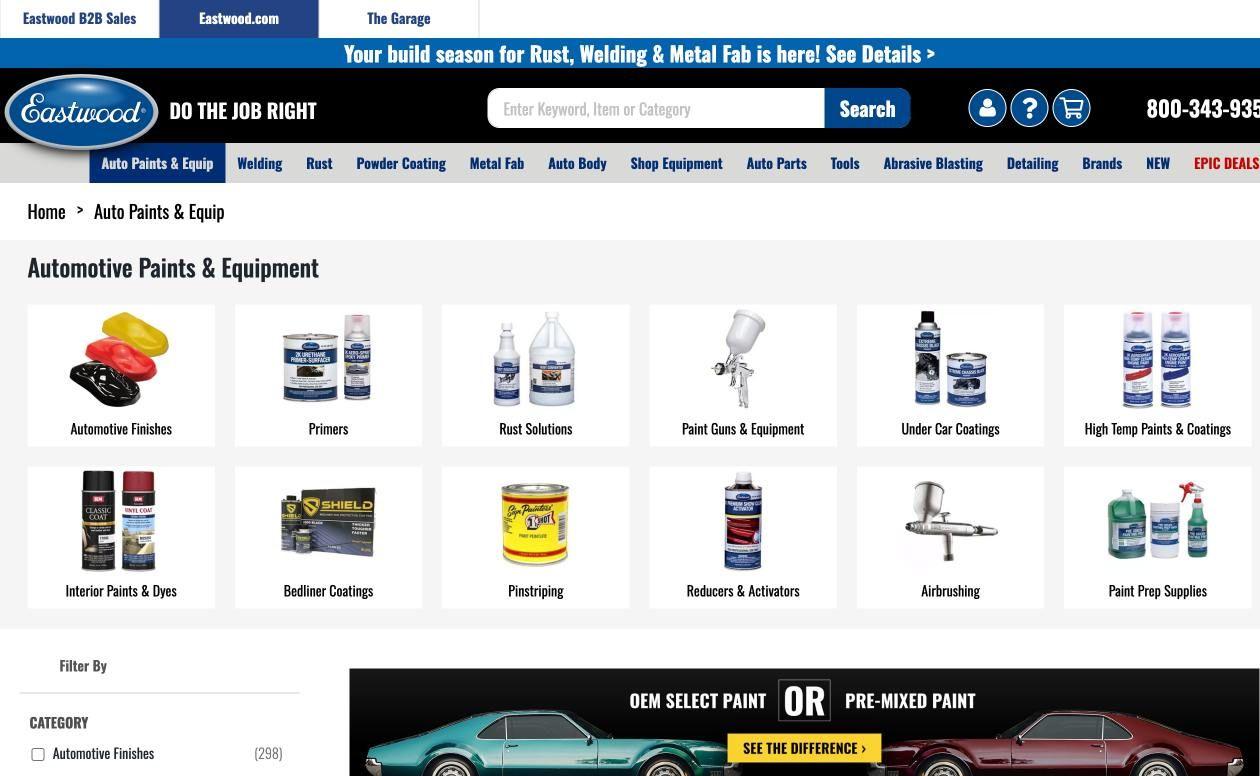
Eastwood
Eastwood, a trusted name in automotive restoration, has partnered with us since 2011 to evolve its Magento platform. From ERP integrations to custom B2B and B2C features, performance optimization, and ongoing support, we’ve built a scalable, high-performing eCommerce solution tailored to their growth.
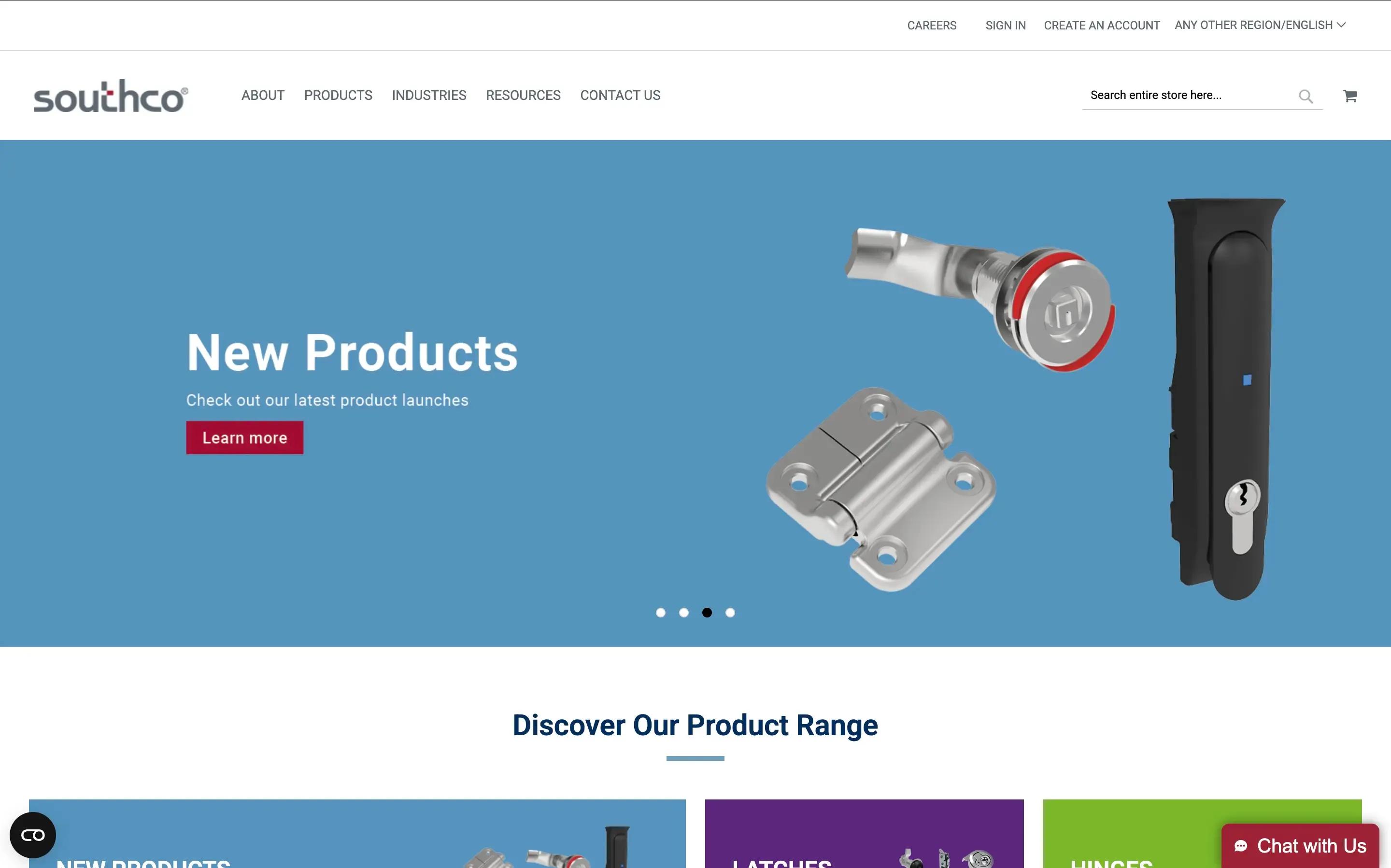
Southco
Southco, a global manufacturer with 100,000+ customers in 83 countries, with 17 manufacturing sites across 9 countries, needed more than a catalog, they needed a scalable Magento 2 solution built for multi-store, multi-warehouse, and ERP-driven commerce. We delivered a future-ready platform with custom integrations, localized storefronts, and ongoing support - ideal for global B2B and manufacturing leaders.
FAQ
Most Magento ERP integration projects take between 4 and 12 weeks, depending on the ERP platform, the number of data flows, and whether middleware is involved. A straightforward product-and-order sync with a cloud ERP can be completed in 4–6 weeks. Complex multi-warehouse, multi-store integrations with legacy ERPs typically require 8–12 weeks including testing and go-live support.
Yes. Many of our clients run custom ERP systems with non-standard APIs. We build custom connectors and, where needed, middleware layers that translate between your ERP's data formats and Magento's REST APIs. Our Southco project is a good example, a fully custom ERP integration supporting global B2B operations across 83 countries.
Real-time sync pushes data between Magento and the ERP immediately when an event occurs — for example, an order placed or stock updated. Batch sync collects changes and processes them on a schedule (every 5 minutes, hourly, or daily). Real-time is better for stock accuracy and order processing speed; batch is more efficient for high-volume product catalog updates. Most integrations use a combination of both.
Not always. Direct API integration works well for simpler setups with a single ERP and limited data flows. Middleware becomes valuable when you need complex data transformation, connect multiple systems beyond just Magento and ERP, or work with legacy ERP platforms that have limited API capabilities. We recommend the approach that fits your actual requirements — not the most complex option by default.
ERP integration with Magento B2B synchronizes, in real-time, crucial data such as custom pricing, inventory levels, customer credit limits, and order history between the storefront and the ERP system. ERP integration syncs company structures, credit limits, customer-specific pricing, and approval chains from the ERP to Magento. This ensures the storefront accurately reflects each customer's purchasing terms and permissions as managed in your ERP.
When migrating from one ERP to another while keeping Magento as the storefront, we run a parallel period where both ERPs feed into Magento. This allows us to validate data accuracy before cutting over. Historical order data, customer records, and product catalogs are mapped and migrated as part of the project, with thorough testing to ensure nothing is lost or misaligned.
Both [Magento Open Source and Adobe Commerce](/technologies/magento-adobe-commerce) support ERP integration through REST and GraphQL APIs. The core difference is that Adobe Commerce includes native B2B features (company accounts, shared catalogs, purchase orders) and cloud-specific infrastructure (message queues, cron groups) that can simplify certain integration patterns. For B2C-only stores, Magento Open Source handles ERP integration equally well.
Cost depends on three main factors: the ERP platform (cloud ERPs with modern APIs are less expensive to integrate than legacy systems), the number and complexity of data flows, and whether middleware or iPaaS is required. A focused product-and-order integration might start at €8,000–15,000, while a full enterprise B2B integration with multi-warehouse, multi-currency, and custom middleware can range from €25,000–60,000+. We scope every project individually based on a technical discovery phase.